
Hydrogen is increasingly mentioned as one of the most promising solutions in the transition to cleaner, more sustainable energy. Although it is the simplest and most abundant element in the universe, its use as a fuel has only become important in the last few decades. Today hydrogen is considered an alternative fuel and even the fuel of the future, thanks to its exceptional energy density and completely clean emissions.
What is hydrogen fuel and how does it work?
Hydrogen can be used as a fuel in two ways:
1. In fuel cells
- Hydrogen reacts with oxygen to produce electricity.
- The only ‘exhaust gas’ is pure water vapour.
- This technology is most commonly used in hydrogen vehicles.
2. As a combustion gas (propulsion fuel)
- Hydrogen can be burned directly in modified internal combustion engines.
- This approach is being researched in industry and aviation.
Hydrogen as a fuel for cars
Hydrogen cars run on fuel cells that produce electricity ‘on the go’. Compared with battery electric vehicles:
- refuelling with hydrogen takes only a few minutes
- the range can be 500–700 km
- the vehicle emits only water
Manufacturers actively developing hydrogen cars include Toyota, Honda and Hyundai.
Why is hydrogen considered the fuel of the future?
Advantages of hydrogen as a fuel:
- Zero CO₂ emissions in use
- High energy density (far higher than batteries)
- Can be used in transport, industry and the energy sector
- Suitable for long distances and freight transport
- Can stabilise power grids as a form of energy storage
Main challenges and limitations
Although hydrogen has great potential, there are also obstacles:
1. Hydrogen production
Most hydrogen today comes from fossil fuels (so-called ‘grey hydrogen’). Green hydrogen, produced by electrolysis using renewable energy, is the cleanest but also the most expensive.
2. Infrastructure
- There are few hydrogen refuelling stations worldwide
- Building them requires high investment
- Transporting hydrogen is technically and logistically demanding
3. Safety and storage
- Hydrogen is flammable, so storage requires high standards
- Special tanks under very high pressure are needed
Hydrogen as an alternative fuel – where can we use it?
Apart from the car industry, hydrogen has a wide range of uses:
- Freight and rail transport
- Aviation (experimental hydrogen engines)
- Shipping
- Industry (steel, chemical production)
- Energy storage from wind and solar power
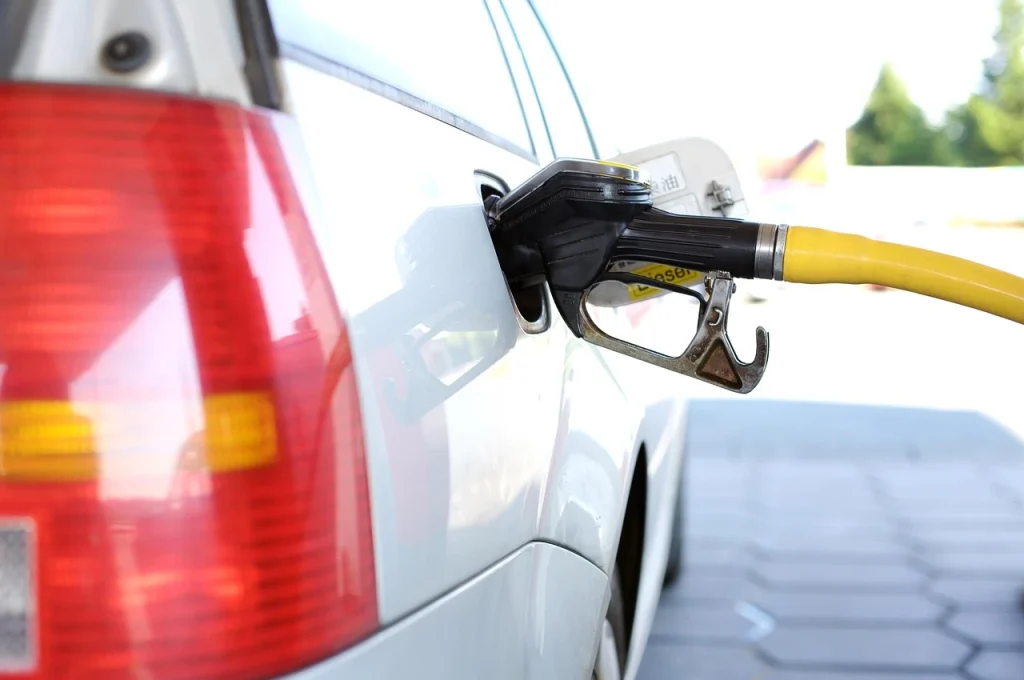
Conclusion: is hydrogen the fuel of the future?
Hydrogen has every characteristic needed to become one of the key fuels in decarbonising the energy and transport sectors. Its greatest potential lies in heavy transport, industry and situations where battery solutions are not efficient.
Although the technology is not yet cheap or widely available enough, global interest and investment are growing year by year. It is therefore very likely that hydrogen as the fuel of the future will play an increasingly important role in the coming decades.
Frequently asked questions (FAQ)
Hydrogen is an energy carrier that can be used in fuel cells or modified engines. In fuel cells, a chemical reaction between hydrogen and oxygen produces electricity, and the only by-product is water vapour.
Yes. Hydrogen can be burned in adapted internal combustion engines, but it is more efficient in fuel cells, where there is no combustion and no CO₂ emissions.
The main advantages are zero emissions while driving, fast refuelling, long range and suitability for sectors where batteries are not practical (lorries, buses, industry).
The biggest challenge is the high cost of producing ‘green’ hydrogen, as it requires a large share of renewable energy. There are also energy losses in electrolysis, compression and transport.
Hydrogen is stored under high pressure in special tanks. Although it is flammable, storage technology and safety systems are highly developed, so the risk is comparable to other fuels.
It is used most in industry (refineries, the chemical industry) and increasingly in transport (buses, lorries, passenger cars). Wider use in the energy sector, shipping and aviation is expected in the future.